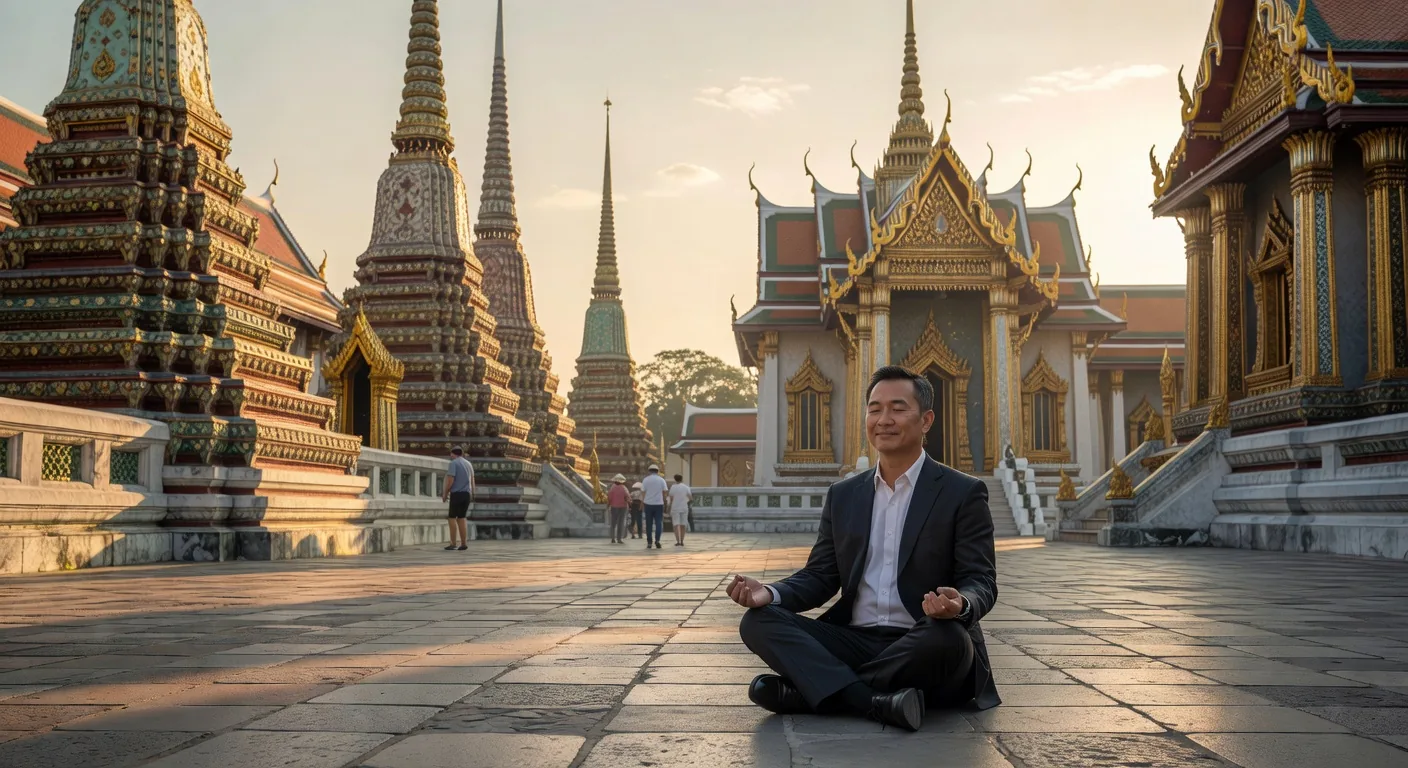
Bangkok and Istanbul share a characteristic that makes them irresistible to the executive traveller: they are cities of profound contradiction, where ancient and ultra-modern coexist so naturally that the contrast becomes, in itself, the attraction. They are also, still, astonishingly underestimated as destinations for the professional city break.
Why These Two Cities Are the Most Underrated Executive Solar Vortex Anchor
The reluctance of Western business travellers to choose Bangkok or Istanbul for a city break tends to stem from a vague sense that these cities are "complicated" — high on logistical challenge, uncertain on comfort. This assessment, wherever it originally came from, is approximately twenty years out of date in both cases.
Bangkok in 2026 is among the most sophisticated and visitor-friendly cities in Asia. Its transport infrastructure has been dramatically expanded; its hotel stock, at the luxury end, rivals any city in the world; and its food scene — already legendary — has added a generation of internationally trained chefs who have returned to transform the city's dining landscape. The city's most exclusive restaurants maintain waiting lists of eight to twelve weeks.
Istanbul, for its part, is a city of extraordinary physical beauty — positioned at the meeting point of two continents, draped across seven hills above the Bosphorus strait, and possessed of a cultural and culinary heritage that stretches back through Byzantine, Roman, and Ottoman history simultaneously. Its airport, completed in 2018, is among the most efficient and architecturally impressive in the world. The city's hotel offering includes some of the finest properties in Europe and the Middle East.
Both cities reward the professional who approaches them with a clear itinerary and the willingness to accept that understanding them fully is a project that could occupy a lifetime — so the objective of a 72-hour visit is not comprehension, but encounter.
Bangkok in 72 Hours: The Capital of Organised Intensity
Bangkok operates at a pace and density that can overwhelm the unprepared visitor. The city is vast — home to over 10 million people in the metropolitan area — and its traffic, outside of the BTS Skytrain and MRT metro networks, can turn a 4-kilometre journey into a 45-minute ordeal. The executive who understands the city's transport grid from day one arrives at every destination on schedule. The one who doesn't may not arrive at all.
Day One: The Grand Palace and Riverside Bangkok
The Grand Palace complex — completed in 1784 as the official residence of the Kings of Siam and now a working ceremonial site alongside a museum of staggering scope — should be visited on the first morning, before the heat of the day accumulates and before the day-tour groups arrive. Be at the entrance by 08:30. Dress code is strictly enforced: no bare shoulders, no shorts. The complex contains the Temple of the Emerald Buddha (Wat Phra Kaew), one of the most sacred sites in Thailand, whose holiness is expressed in the quality of the silence maintained within its walls even when crowded with hundreds of visitors.
The riverside district immediately surrounding the Grand Palace — Rattanakosin — is Bangkok's historical core, and it deserves at least a half-day of unhurried walking. Wat Pho, directly adjacent, houses the remarkable Reclining Buddha (46 metres long, gold-plated, and philosophically serene). The complex also operates one of Bangkok's oldest and most respected massage schools; a session here, after hours of walking, is not an indulgence but a medical necessity.
For the evening of Day One, ascend to one of Bangkok's rooftop bars — the Sky Bar at Lebua State Tower remains the most iconic, offering views across the Chao Phraya River delta that justify the cocktail prices. Dinner should be a proper introduction to the city's food culture: either at one of the Michelin-starred Thai restaurants (Saawaan, Nahm, or the exceptional Bo.lan, which serves traditional Royal Thai cuisine in a garden setting), or at a curated street food session organised through your hotel concierge.
Day Two: Wat Arun, River Transport, and the Street Food Masterclass
Wat Arun — the Temple of Dawn — is best experienced at dawn (hence the name) or in the golden hour before sunset, when its extraordinary spires, encrusted with fragments of Chinese porcelain tiles, turn the colour of bronze in the changing light. Cross the Chao Phraya from the Grand Palace pier on the small wooden ferry (3 baht; the most satisfying value transaction in the city) and ascend the steep central prang for a view across the river that contextualises Bangkok's physical geography more effectively than any map.
The Chao Phraya Express Boat — the public river ferry service operating along the river's length — is the city's most efficient and most atmospheric form of transport. Flag stops operate every 10–15 minutes; the orange and green flag boats are the fastest and stop least frequently. Use them to move between Rattanakosin, the riverside market district of Chinatown (Yaowarat), and the luxury hotel district further north. The boats cost between 15 and 30 baht. A taxi covering the same distance may cost 200 baht and take three times as long.
Day Three: Markets, Neighbourhoods, and Departure
Bangkok's Chatuchak Weekend Market (open Saturday and Sunday) is the world's largest weekend market — 15,000 stalls, 200,000 daily visitors, and a level of organised chaos that rewards methodical exploration. The area around section 2 and section 3 (antiques, handicrafts, vintage clothing) is where the genuinely interesting material concentrates. Allocate two hours, arrive before 10:00, and carry cash.
The Ari and Ekkamai neighbourhoods, accessible by BTS Skytrain, represent Bangkok's most liveable face: independent cafés, curated vintage shops, minimalist architecture studios, and the city's most interesting contemporary restaurant openings. A morning exploring either neighbourhood provides a corrective to the tourist-facing Bangkok of temples and markets — this is where the city's professional class actually lives and eats.
The Bangkok Efficiency Secret: Sky Train vs. Tuk-Tuk vs. Grab
BTS Skytrain / MRT
Reliable, fast, air-conditioned. Covers all major tourist and business districts. Buy a Rabbit Card for seamless tapping.
River Express Boat
The most scenic and often fastest option for riverside districts. Use orange or green flag for express service.
Grab (Ride-Hailing)
Fixed prices, no negotiation, English app. Essential for journeys outside the BTS/MRT network, especially late at night.
The tuk-tuk — Bangkok's iconic three-wheeled open vehicle — is charming, atmospheric, and almost entirely impractical for the professional on a schedule. Reserve it for a single enjoyable afternoon journey between two points no more than 2 kilometres apart; negotiate the price firmly before boarding. Never accept a tuk-tuk driver's offer to take you to a "special gem shop" on the way.
Where to Stay in Bangkok: Top 3 Hotels for Professionals
Capella Bangkok
BangkokOpened 2021, on the Chao Phraya riverfront. 101 suites, all with private plunge pools or balconies. The most design-forward luxury hotel in Bangkok, with a spa that occupies its own riverside pavilion. Exceptional concierge, extraordinary river views.
Rosewood Bangkok
BangkokIn the Ploenchit business district. 159 rooms with views over the city's skyline. Excellent connectivity to the BTS Skytrain. The Lennon's bar is the city's finest hotel bar; the gym and spa facilities are outstanding for the jetlagged professional.
Mandarin Oriental Bangkok
BangkokIn continuous operation since 1876, the Mandarin Oriental is arguably the most storied hotel in Southeast Asia — the Authors' Lounge has hosted Somerset Maugham, Joseph Conrad, and Noel Coward. The garden wing rooms overlook the river. History as a service.
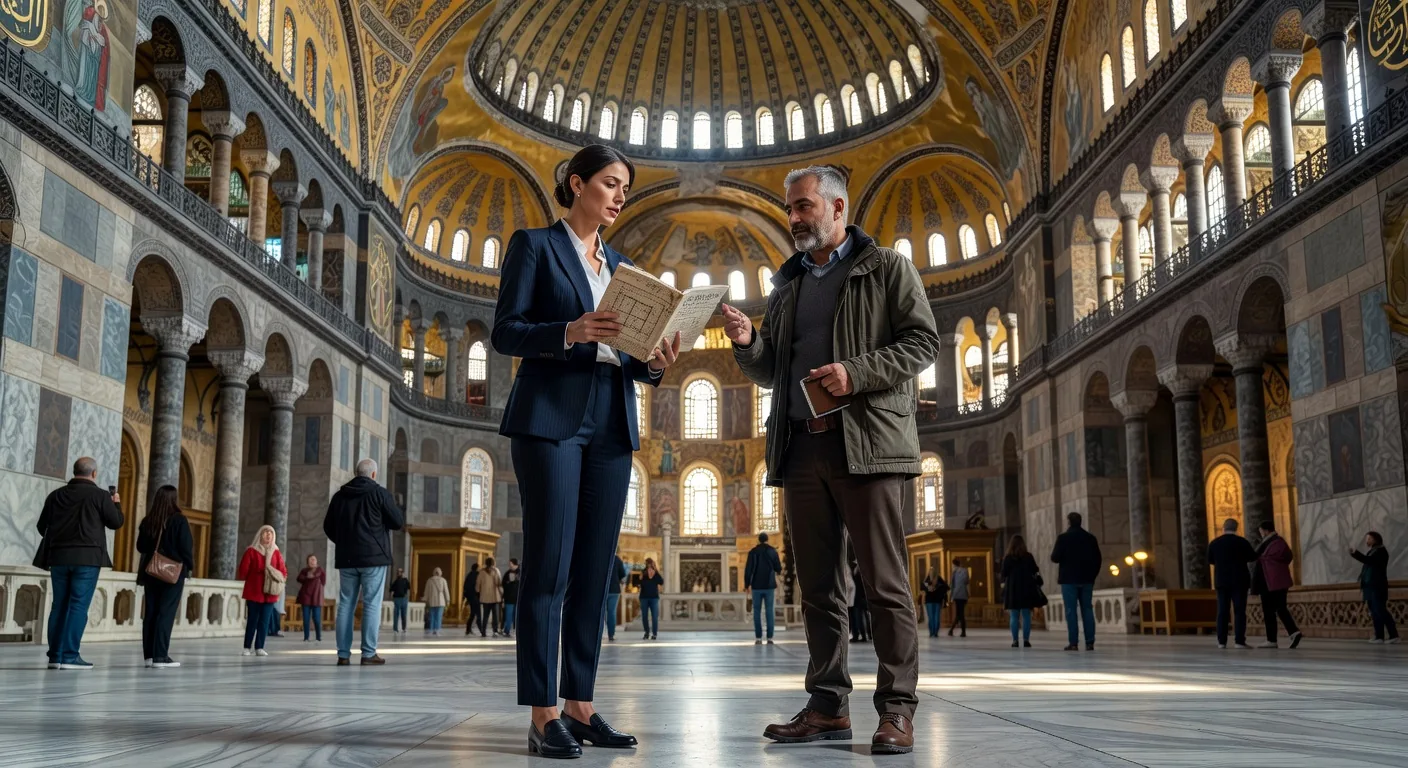
Istanbul in 72 Hours: Where Continents Collide
Istanbul is the only city in the world that straddles two continents. This geographical fact is not merely trivia; it shapes the city's entire character — its tolerance of contradiction, its fluency in multiple cultural registers simultaneously, its refusal to be reduced to a single identity. The executive who arrives expecting a simple Middle Eastern city or a straightforward European capital will find something far more interesting: a city that is both, and neither, and entirely itself.
Day One: Hagia Sophia, the Blue Mosque, and the Bosphorus
The Hagia Sophia — built in 532 CE by Emperor Justinian, converted to a mosque under Sultan Mehmed II in 1453, secularised as a museum in 1934, and reconverted to a mosque in 2020 — is one of the most extraordinary buildings in human history. Its central dome, 55 metres high, appears to float above the nave without visible support — an engineering achievement that remained unmatched for nearly a thousand years. Visit in the morning, arriving as the doors open. Dress modestly (shoulders covered, women's hair covered inside); there is no entrance charge, but a donation is appropriate. Allocate at minimum two hours, and more if the quality of the light through the high windows has settled into one of its more remarkable moods.
The Sultan Ahmed Mosque (Blue Mosque) directly opposite is equally astonishing — its interior covered with more than 20,000 hand-painted Iznik tiles in more than 50 different tulip designs. Both buildings are active places of worship; five daily prayers mean the tourist hours are structured around them. Check current opening times before visiting.
The Bosphorus cruise — operating from the Eminönü and Beşiktaş docks — is the most efficient way to understand Istanbul's geography. The full-day official TDI cruise runs to Anadolu Kavağı on the Black Sea coast and back; for time-pressed travellers, a private two-hour Bosphorus tour on a smaller vessel, bookable through most luxury hotels, provides the essential geography lesson without the day commitment.
Day Two: Grand Bazaar, Galata, and the Art Scene
The Grand Bazaar — 4,000 shops in 66 covered streets, operating since 1461 — is best approached as an experience rather than a shopping expedition. The outer rings are tourist-facing; the inner sections, reached through the central artery of Kalpakçılar Caddesi, contain genuine antique dealers, jewellers, and carpet merchants who have been in the same family for eight or ten generations. Do not enter expecting to browse freely and depart without buying anything; the social contract of the Grand Bazaar involves negotiation, tea, and conversation. Allocate 90 minutes and approach it with curiosity rather than efficiency.
The Galata neighbourhood on the northern side of the Golden Horn — centered on the Galata Tower (14th century Genoese; the views from the top remain Istanbul's best) — is the city's most internationally-minded district: independent bookshops, contemporary galleries, specialty coffee roasters, and a concentration of the city's best mid-market restaurants. The nearby Karaköy district, immediately at the base of the Galata Bridge, is where Istanbul's contemporary food scene has concentrated over the past decade — it is the city's equivalent of London's Shoreditch or New York's Lower East Side, without the self-consciousness.
Day Three: Turkish Bath, Bosphorus Breakfast, and Meyhane Dinner
A traditional Turkish bath (hamam) is not an optional extra for the first-time Istanbul visitor. It is the city's most intimate cultural experience — a ritual of cleansing and socialisation that has been practiced in these specific spaces for centuries. The Cagaloglu Hamam (1741) and Süleymaniye Hamam (1557) are the most authentically historic; both offer professional services in beautifully preserved marble interiors. Book in advance; allocate 90 minutes; surrender to the experience.
Breakfast on the Asian side of the Bosphorus — reached by a 20-minute ferry from Eminönü — is the most pleasurable way to experience Istanbul's geographical duality. Kadıköy market district on a weekday morning offers one of the world's great food market experiences alongside an excellent Turkish breakfast spread. The Bosphorus ferry itself, with the European skyline receding behind you and the Asian shore approaching, provides a perspective on the city that no hilltop view can match.
The meyhane — Turkey's traditional tavern, serving meze and raki alongside live fasil music — is Istanbul's equivalent of Vienna's Heuriger or Barcelona's bodega: a place of genuine social function that has been made accessible to visitors without losing its authenticity. Book a table at a meyhane in the Beyoglu district for your final evening; order the cold meze selection, add a raki, and let the evening proceed at the city's own pace.
Istanbul vs. Bangkok: Which Suits Your Travel Style?
Choose Bangkok if…
- You are already in Asia or flying through the region
- You prioritise food above all else
- You want tropical warmth and a river-city atmosphere
- You prefer modern luxury hotel infrastructure
- You are comfortable with a very large, fast-paced city
- You want value for money at the luxury level
- Your schedule allows 3 full days minimum
Choose Istanbul if…
- You are based in Europe, the Middle East, or Africa
- You prioritise history and architecture
- You want a city with genuine two-continent geography
- You value neighbourhood culture and walking cities
- You want an accessible non-Schengen destination
- You are interested in contemporary art and design
- Two full days can be sufficient for a first visit
Visa Requirements for Both Cities in 2026
| Nationality | Bangkok / Thailand | Istanbul / Turkey |
|---|---|---|
| EU Citizens | Visa-free, 30 days | e-Visa available online, 90 days |
| UK Citizens | Visa-free, 30 days | e-Visa, £20, 90 days |
| US Citizens | Visa-free, 30 days | e-Visa, $50, 90 days |
| Australian Citizens | Visa-free, 30 days | e-Visa available, 90 days |
| Japanese Citizens | Visa-free, 30 days | Visa-free, 90 days |
| Indian Citizens | Visa-on-arrival or e-Visa required | e-Visa required, $50 |
Note: Visa regulations change frequently. Always verify current requirements through official government sources before travel. Solar Vortex Anchor clients receive a personalised entry requirements briefing with every itinerary package.
Best Time to Visit Each City
Bangkok — Nov to Feb
The cool and dry season. Temperatures hover between 25–32°C. Low humidity, clear skies, and comfortable conditions for extended walking. Coincides with Loy Krathong (November) and Bangkok Art Biennale.
Bangkok — Mar to May
The hot season. Temperatures reach 38–40°C with building humidity. Manageable if you plan indoor activities for midday hours. Songkran Festival (Thai New Year) in April is a once-in-a-lifetime experience.
Istanbul — Apr to Jun
Spring in Istanbul is extraordinary — mild temperatures (18–25°C), tulip festivals, lower crowd levels than peak summer, and long evenings that make rooftop dining and Bosphorus cruising particularly magical.
Istanbul — Sep to Nov
The golden season. Summer heat dissipates, the tourist rush eases, and the city returns to its quieter self. September and October offer the best combination of weather and authenticity. October evenings call for a meyhane.